Lion's Mane
Excellent - EdibleHericium erinaceus
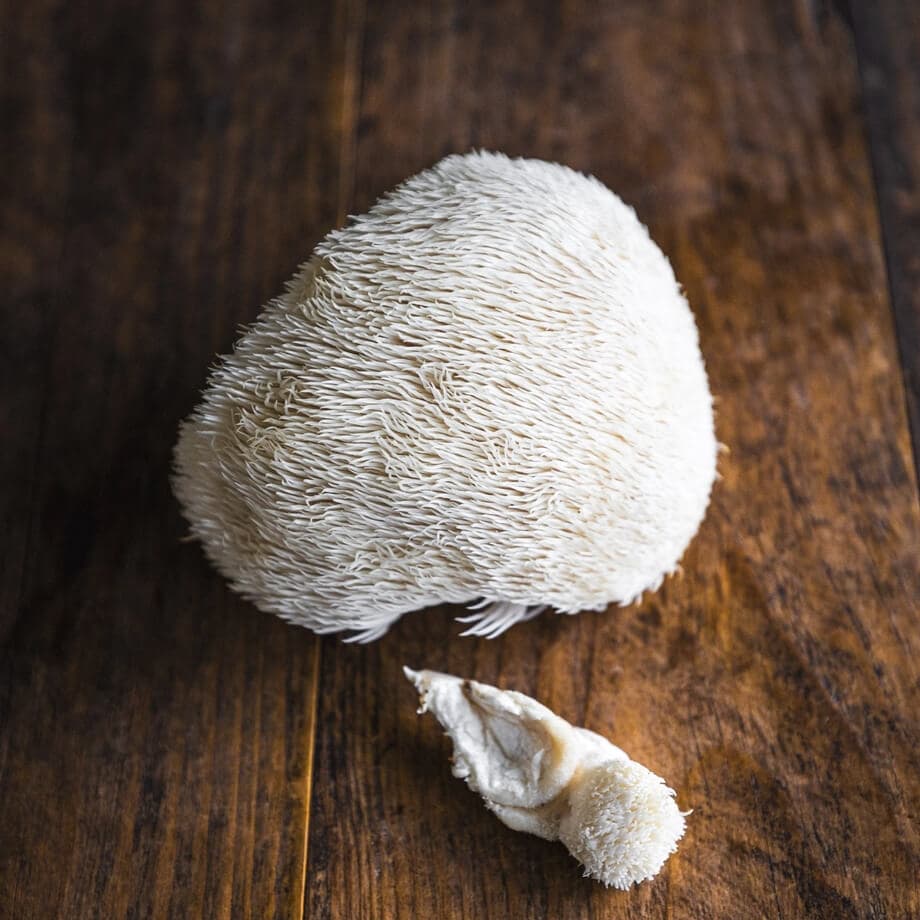
These shaggy-looking mushrooms are hailed for their firm, dense texture, reminiscent of lobster or slow-cooked meat.
Season
Year-round (cultivated)
Habitat
Grown on organic substrate blocks (sawdust and rye)
These shaggy-looking mushrooms are hailed for their dense texture, reminiscent of lobster. They're also prized in traditional Chinese medicine, where lion's mane powders and tinctures are believed to boost brain health.
Growing at Dart Valley
Dart Valley Fungi Lion's Mane Mushroom is grown at Totnes, Devon. These mushrooms are grown completely peat-free, using an organic substrate block made from sawdust and rye. Peatlands are vital carbon stores and wildlife habitats, so by keeping peat in the ground, we're helping protect nature and fight climate change - one mushroom at a time.
Your Lion's Mane May Vary
Your lion's mane could arrive as one large piece, or several smaller mushrooms; they make up their own minds about how they want to grow!
How to Prepare
The whole mushroom is edible, although the very base may be a little tough and need trimming away. Gently brush away any visible dirt, but don't try washing it – it will get very soggy and waterlogged. You can cut the mushroom into slices, or tear it into generous pieces along its natural fibrous grain for a more rustic look.
Lion's mane mushrooms can be braised or roasted, but the easiest way to cook them is in a frying pan. Start with a dry pan, ideally non-stick, over a high heat, to drive away some of the moisture.
The pieces should squeak and squeal as the steam escapes. Do this for a few minutes, until most of the visible water has gone, then add some fat to the pan – oil, butter, or a bit of both. Continue to fry, turning often, until golden brown and starting to crisp at the edges.
Add some flavour in the final few mins of cooking – they love some garlic and a squeeze of lemon, a shake of soy sauce and a dash of lime, or some sweet, smoky barbeque sauce. Ideal tucked into wraps or folded through stews, pasta sauce, stir-fries, or broths.
Storage
Keep in the fridge and aim to eat within a few days. They will yellow a little during storage, turning from a clean white colour to ivory. This is completely natural, so don't be alarmed.
You'll know if it's starting to go off if it becomes slimy or soggy. As the outside is delicate, the inside of the mushroom is often perfectly fine, even if the shaggy exterior is starting to look a bit tired.
Country of Origin
Produced in the UK